
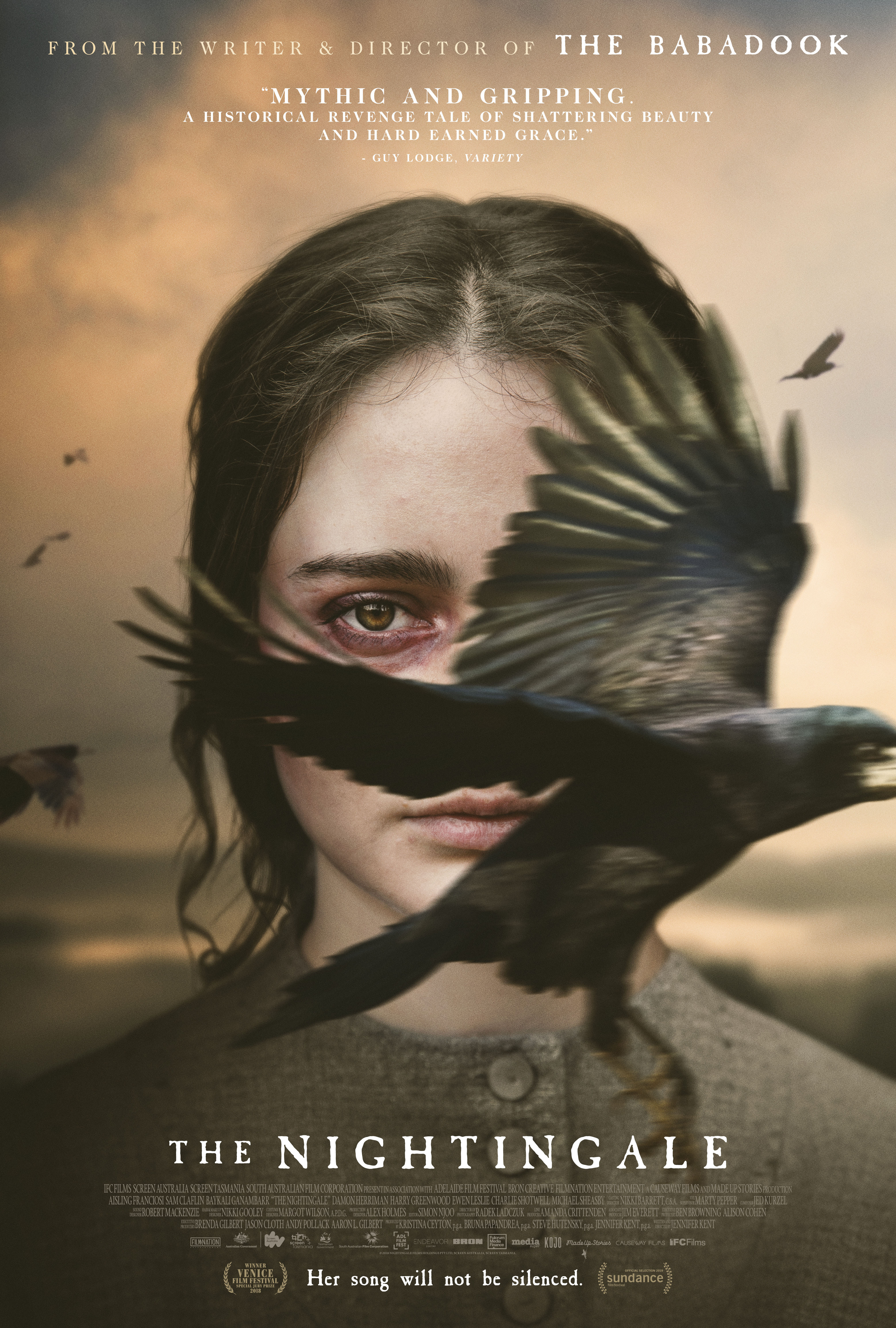
Written and directed by Jennifer Kent, The Nightingale walks the line between rape-revenge and historical psychological thriller, but it follows a similar plot structure to rape-revenge media. Set in 1825 in Van Diemen's Land, or modern-day Tasmania, the film follows a young Irish convict, Clare Carroll. After British Colonial forces gang-rape her and murder her husband and infant daughter, she seeks vengeance. She requests the help of Aboriginal Tasmanian tracker, Billy, who is focused on his own justice for the colonizers’ crimes against his people during the Black War.
The Nightingale was the first of my film selections to have a female-identifying director, and this difference, coupled with the entrance into the twenty-first century, was apparent in the film’s brutal but nuanced depiction of sexual assault and trauma. The rape scenes are far from eroticized; instead, Kent portrays the sequences with a harsh, sobering realism. The camera rarely strays from Clare’s expressions, literally and figuratively centering the narrative on survivors. Like Ms .45, The Nightingale features multiple nightmare sequences as Clare struggles to process her assault and her family’s murder, often seeing her deceased husband and child. On her literal path to revenge, Clare violently bludgeons the soldier who murdered her child. This murder, too, haunts her in her nightmares. Though rattled and bloodied, she presses on, intent on killing Lieutenant Hawkins, a sadistic British army officer and the primary antagonist.
However, when Clare is presented with the opportunity, she does not enact physical violence. Instead, Clare approaches Hawkins as he dines with the man who can promote him to captain. There, she sings an Irish Gaelic song—a song of defiance rooted in her rich heritage. As opposed to perpetuating the violence exacted upon the imprisoned and colonized, she retains her humanity and moves beyond the brutality inflicted upon her in a first step toward healing. This time, the revenge falls to Billy. While Hawkins stays in an inn, Billy spears Hawkins and his subordinate, Ruse, in his own act of retribution. Billy’s actions are a response to colonialism, Clare’s poor treatment, and the murder of his people.
The film ends with Billy’s death on a beach as the sun rises, and the culturally different, but equally violated, pair share a final moment of mutual recognition and connection. In these final moments, it is clear Clare will find her way out of the darkness.
The film also sheds light on a topic entirely unexplored in the other films: a monstrous history of violence against indigenous women. The film includes a scene depicting the rape and murder of an Aboriginal woman, which, like scenes with Clare, does not attempt to eroticize or spectacularize the assault. In doing so, writer-director Kent attempts to expand the narrative beyond Clare alone. As an Irish woman, her story runs parallel to Billy and his people’s, both finding common ground in their shared trauma and oppression under British colonial forces. In conversation with the BBC following film screenings, Kent explained she had also “collaborated with Aboriginal elders in Australia to present an ‘honest and necessary depiction of their history.’” As such, The Nightingale demonstrates what is possible for a new era of ‘rape-revenge’ films. While there is retribution, there is also a complex exploration of trauma, kinship, and connection. Imbued with a new perspective, these films can work to expose long histories of violence against women, especially when they are used as a vehicle to highlight indigenous voices and stories.
On this matter, though the film spotlights Van Diemen’s Land and the Tasmanian Aboriginal people, these topics are also relevant within the United States. In The Beginning and End of Rape: Confronting Sexual Violence in Native America, author Sarah Deer details the colonial and political violence perpetrated against Native women. She notes that news sources wrongfully deem the rape of Native women as an “epidemic,” when, in fact, “rape in the lives of Native women is not an epidemic of recent, mysterious origin. Instead, rape is a fundamental result of colonialism, a history of violence reaching back centuries” (Deer x). Deer makes clear that Native women experience sexual assault and abuse at a disproportionate rate compared to other demographics (3). As with all of the films discussed in this project, she articulates how Native women’s oppression is systemic, buttressed by limited or underfunded support procedures, rape culture, and flawed juridical structures, many of which have permitted rape by destroying tribal legal systems. In response, Deer outlines reform proposals in which “survivors are believed, advocacy is readily available, and perpetrators are held accountable,” emphasizing the value of grounding tribal law in survivors’ voices, expanding protections, and adopting a community-based approach (138, 137-156). For Deer, the path forward occurs within and for tribal communities. When thinking about how to reconfigure protections, support, and legal processes for individuals of all backgrounds, I feel we could each take a page out of Deer’s book.