
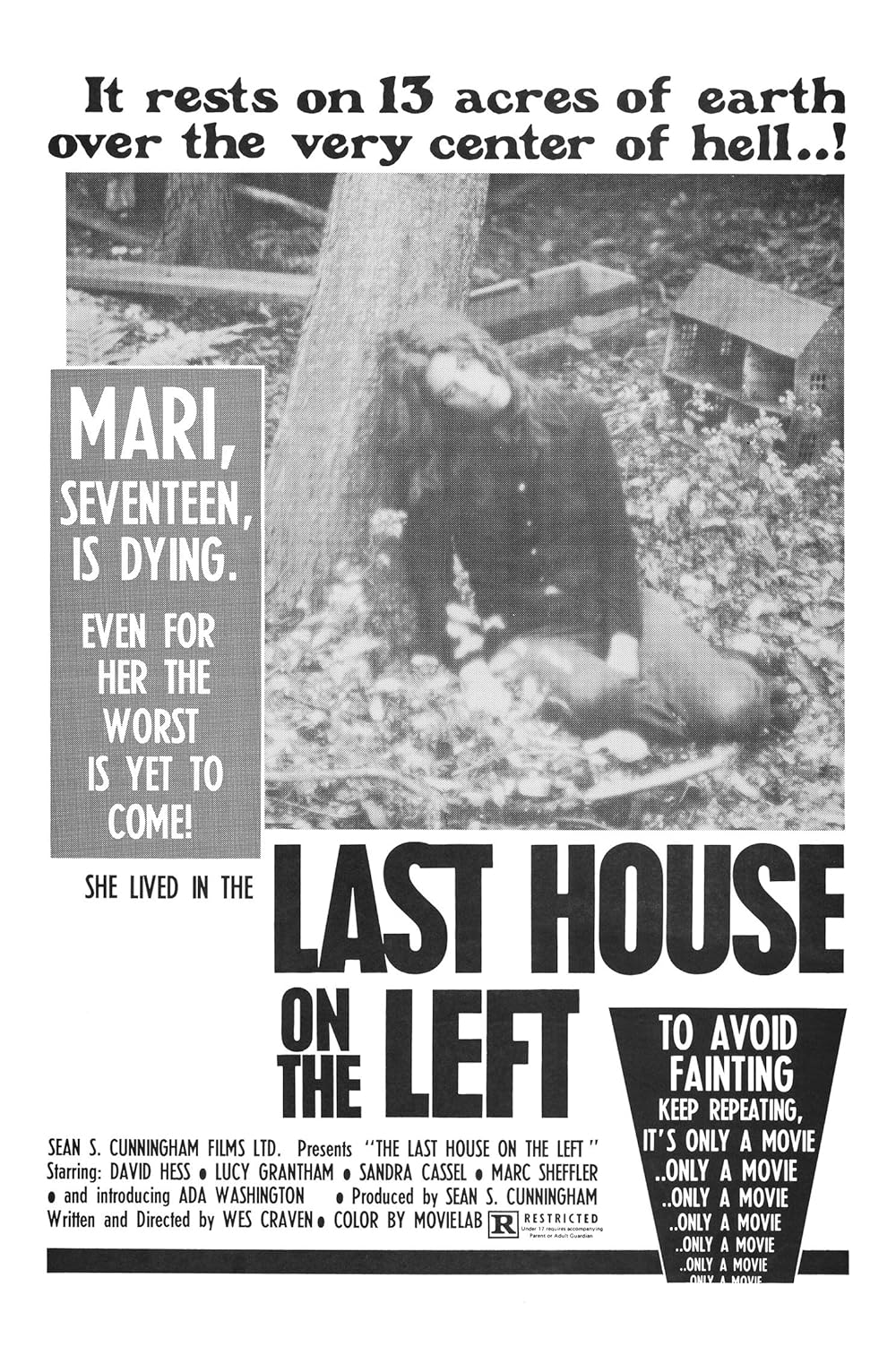
Prolific horror director Wes Craven’s debut film, The Last House on the Left (1972), was among the first of its kind and an early entry into the rape-revenge subgenre. The film drew heavily on Ingmar Bergman’s The Virgin Spring (1960). Like The Virgin Spring, which centers on a father’s response to the rape and murder of his young daughter, The Last House on the Left engages with the notion of vigilante justice. The narrative follows teenage friends Mari and Phyllis as they travel to see a concert and later search for drugs, where a group of escaped convicts, led by Krug Stillo and including Sadie, Fred, and Junior, subjects them to torture and rape in the woods, where they are eventually murdered. The convicts are unaware they are near Mari’s home. When they unknowingly stay the night with Mari’s parents, her family uncovers the convicts’ identities and executes a violent plot to avenge their daughter
Upon its release, audiences had never seen anything quite like The Last House on the Left. From a production standpoint, it is a terrible film. The editing is choppy, the music is both unnerving and jovial, and the acting is poor. I suspect some of these choices were deliberate, intended to create a raw, unflinching aesthetic to exaggerate the disturbing torture sequences. Whatever the case, Craven allows audiences to view the violence almost as fully as its victims do. While the film was not as excessive as I Spit on Your Grave (1978) in its depiction of violence, it is clear that Mari and Phyllis are brutalized, with their deaths and Mari’s assault displayed on screen. Though a rape-revenge film, it is a product of its time, capturing the nihilism and disillusionment that pervaded the Vietnam era. Craven acknowledged the film was crafted, in part, by the explicit news footage from the war that wasn’t reflected by the horror and action films being produced at the time. This harrowing aura pervades the piece; there is no safety or justice to be found—not in other women, not within the seemingly comfortable home, and certainly not with law enforcement.
Amidst the film’s chaos, audiences are introduced to two cops—a sheriff and a deputy—who function as twisted comic relief. They are characterized as highly incompetent, failing to recognize a vehicle stopped on the side of the road as that of the escaped convicts. The bumbling pair do not apprehend the criminals, only arriving at Mari’s house after her parents have murdered their daughter’s killers. In this way, The Last House on the Left begins to put forth an element consistent with the other films. In these women’s worlds, justice is not served via a swift arrest and prosecution. In fact, police are often not present in the films at all, or when they are, law enforcement or, in the case of I Spit on Your Grave (2010), are implicated in the sexual assault itself. The portrayal of inept police or their direct absence in other films alludes to women’s discomfort with speaking to law enforcement following sexual assault situations, as well as the role authorities play, through complacency or direct participation, in upholding a larger system that often fails to support women.
This flawed system is connected to the familial vengeance executed in this film, which is also notable for its connection to real-world statistics and scenarios. Prevention educators often note that survivors may hesitate to disclose sexual assault to family members or partners out of fear that they will not receive support, or that loved ones will respond by seeking retribution. Once again, survivors’ fear and the potential for familial retaliation point to systemic failures in the ways survivors are treated and the ways rape is prosecuted. However, families can and have fostered productive juridical transformation. After the rape and murder of Jeanne Clery on Lehigh’s campus in 1986, Clery’s family established the Jeanne Clery Campus Safety Act, which requires colleges and universities to report campus crime data, support victims of violence, and publicly outline their policies and procedures for campus safety. They also founded the Clery Center, which assists institutions in complying with the act. Jeanne Clery’s family is just one example of how families have driven positive change to honor their family member, fill structural gaps, and provide much-needed support to survivors across the nation.
Visit the Office of Survivor Support and Intimacy Education's resources for family and loved ones here.